Who Gets Left Behind When AI Moves Fast?
Michelle Alarcon and responsible leadership in the age of AI
“We do not wait for regulations.”
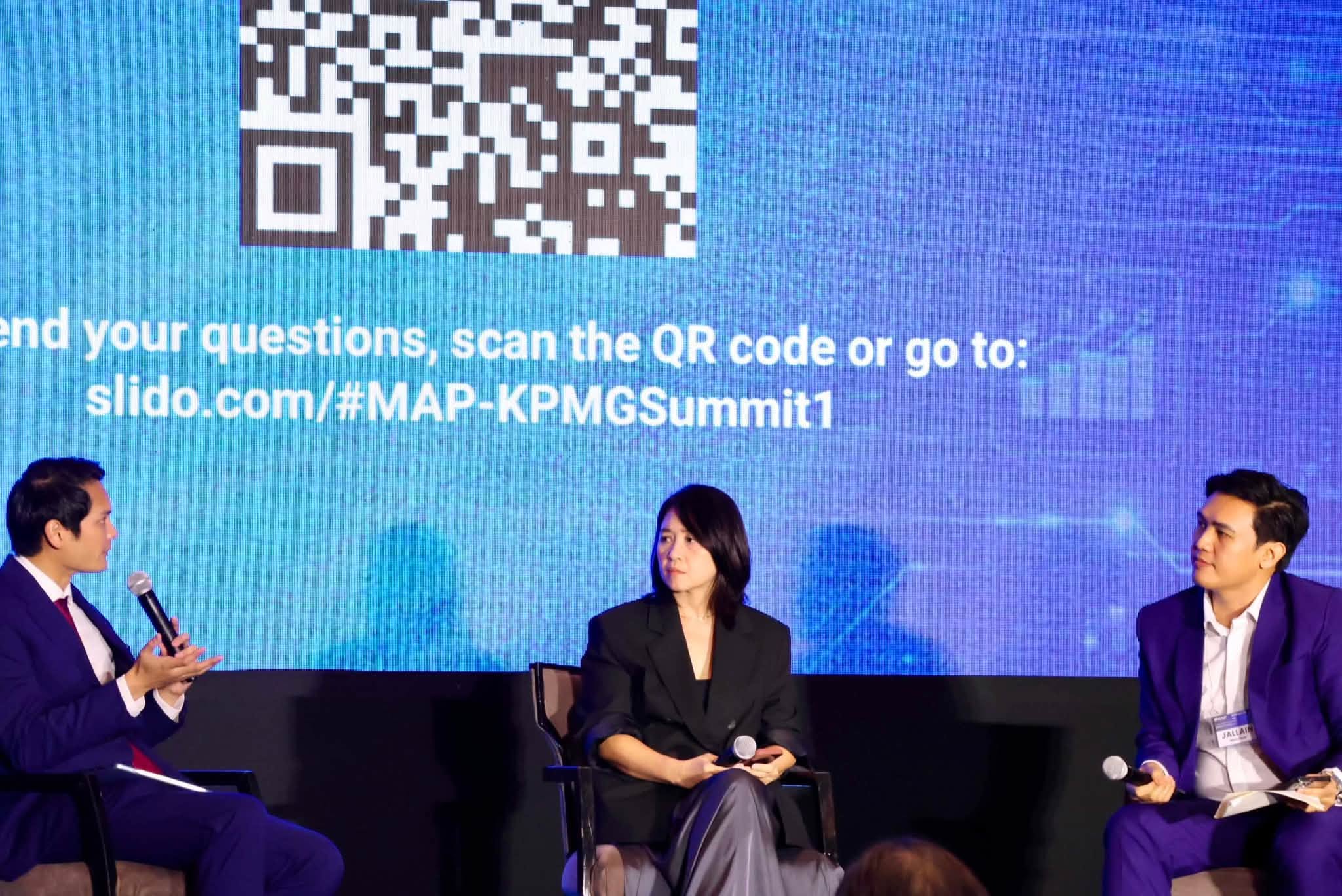
Michelle Alarcon delivered the warning inside a ballroom at Shangri-La The Fort during the second MAP x KPMG Technology Summit. At this event, she was surrounded by conversations about how artificial intelligence could transform businesses, increase productivity, and change the nature of work itself.
These discussions were necessary. The Philippines cannot afford to ignore a technology already reshaping industries around the world. I had entered the summit expecting to learn more about what AI could make possible. However, Alarcon redirected everyone’s attention toward a more uncomfortable question: if organizations race to adopt AI systems, who will be held accountable when something goes wrong?
By my count, only three of the summit’s twelve speakers were women, and Alarcon was one of them. Yet what made her presence memorable was not simply that distinction. While AI was often discussed through the language of speed and efficiency, she focused on the structures needed to ensure that its use remained responsible.
The warning came from someone who had spent more than two decades within the industry she was asking to act with greater care. Alarcon studied statistics at the University of the Philippines from 1990 to 1995. She later founded Z-Lift Solutions, an analytics consulting firm established in 2013, and now serves as president of the Analytics and Artificial Intelligence Association of the Philippines (AAP). She is also a co-founder and Head of Learning of For The Women (FTW) Foundation.
To understand the significance of this path, it is useful to consider the field she entered. In 1990, when Alarcon began studying statistics, the Philippine female science and technology workforce included 179,075 women. Of that number, only 4,052, or 2.3%, worked as mathematicians, statisticians, or related professionals. The figure does not show how many women were in Alarcon’s classes, nor can it tell us whether she personally felt isolated or encountered discrimination. It would be irresponsible to invent those experiences for her. However, it does show that she entered a professional pathway occupied by only a small portion of Filipino women working in science and technology.
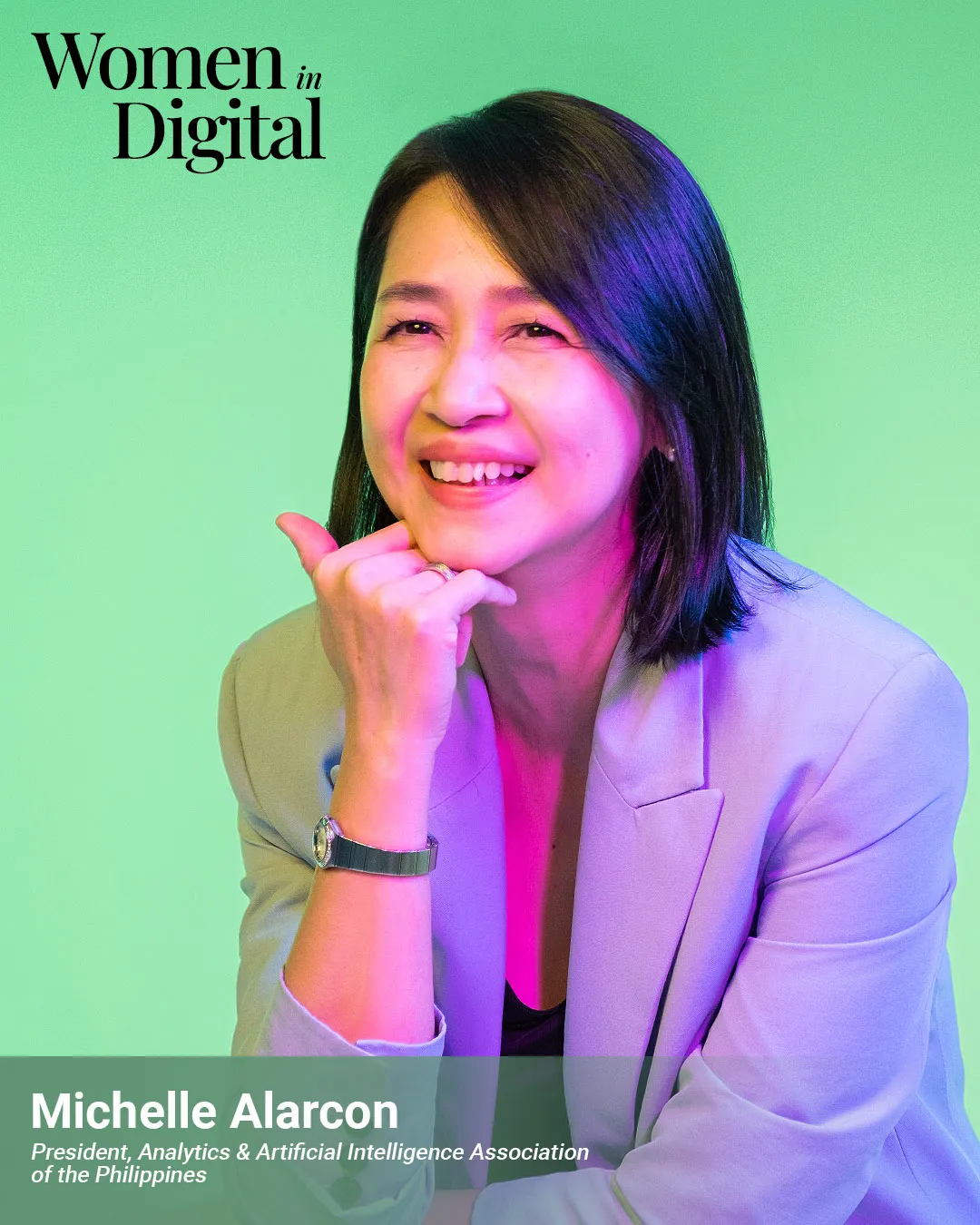
Decades later, Alarcon’s advice to younger women revealed how she understood the responsibilities that followed success. Her first instruction was simple: “Just excel”. Yet excellence was not presented as an individual destination. She encouraged women to use the opportunities they gained to “create more spots for other girls.” Her message ultimately arrived at a more challenging principle:
“When you excel in the game, you can change the rules.”
That statement gives insight into her leadership story. Alarcon entered a narrow professional pathway, developed expertise within it, and later used that expertise to widen the same pathway for others. Leadership, from this perspective, leverages an earned place in an institution to create opportunities for people who might otherwise remain outside it.
This philosophy takes concrete form through For The Women Foundation. FTW identifies high-demand and future-resilient careers, then provides free training to Filipinas who may not have had access to conventional pathways into those fields. As of December 2025, the foundation reported reaching 607 women. It also reported a 77% average placement rate and a 218% average increase in income among the alumni covered by its measurement period.
Behind these figures are women whose lives do not follow the usual image of a technology professional. One of FTW’s featured scholars, Julie, had worked as a public school teacher and entered its data science program without a professional background in technology. She later became a full-time data analyst in the financial-technology sector. According to FTW, her desire to create a better future for her family helped drive that transition.
Reading Julie’s story after the summit changed how I understood Alarcon’s advice. “Changing the rules” did not mean succeeding within an industry and then simply encouraging other women to follow. It meant constructing the training, mentorship, community, and connections to employment that made following possible.
Technology can create new forms of work and socioeconomic mobility. However, these opportunities do not distribute themselves equally. New industries may continue to favor people who already possess the education, professional networks, financial resources, and confidence needed to participate. Through FTW, Alarcon and her colleagues responded to this inequality by building a pathway for women in the Philippines to break into the field.
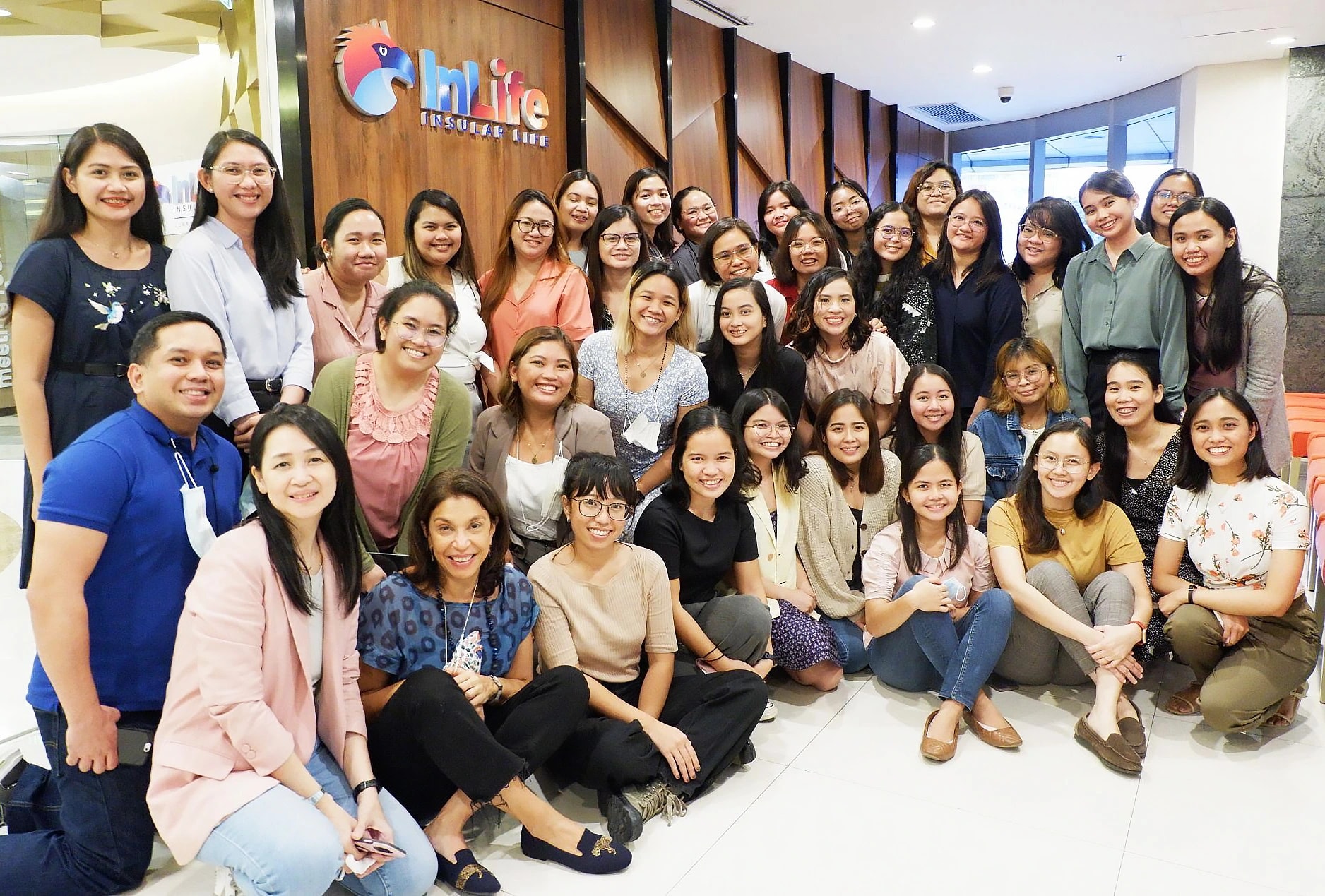
Back inside the ballroom, Alarcon applied the same concern for inclusion and responsibility to the systems organizations were beginning to adopt.
She presented an ordinary workplace. One department was experimenting with ChatGPT. Marketing had purchased an AI platform. Human resources was using AI to screen resumes. Developers were using agents to write software. Each activity appeared separate and relatively harmless. However, they revealed how quietly AI could spread across an organization. Different departments could begin processing sensitive information or influencing decisions through systems that other leaders did not know existed. When an inaccurate or harmful result emerged, responsibility could be passed between parties until no one appeared fully accountable.
Alarcon argued that AI governance must therefore become a permanent discipline within organizations. Governance must follow the full lifecycle of an AI system, from the identification of a possible use case to its validation, deployment, monitoring, and eventual retirement.
Until that discussion, I had understood governance mainly through the language of policies and technical safeguards. Alarcon’s example made it more immediate. Governance determined whether a person affected by an automated decision would still have someone human to question.
This was why her statement stayed with me: “We do not wait for regulations.”
At first, the claim may appear contradictory. Governance is often understood as compliance with rules imposed by the government. However, technology frequently develops faster than the laws intended to govern it. If organizations wait for every possible risk to be formally prohibited, they may continue deploying systems that affect people’s livelihoods before adequate protection exists.
Alarcon had expressed the same concern before the summit. In an October 2025 discussion on responsible technology adoption, she observed that ethics had too often become “more of an afterthought” following a crisis. By that point, however, another person may already have carried the cost of the failure. Responsible leadership requires institutions to consider possible harm while technologies are still being introduced, rather than only after that harm becomes visible.
Consider the human resources department using AI to screen resumes. The system may help recruiters evaluate thousands of applications more efficiently. This is a real benefit, especially for organizations facing limited time and large applicant pools. Yet the same system may influence whether a person gains access to employment and is able to provide for their family.
Once AI begins having this level of influence, efficiency cannot remain the only measure of success. Leaders must ask what data shaped the system’s recommendations and whether it was tested for unfair outcomes. They must also ensure that a human being can explain, question, or reverse its output.
The problem becomes more concrete when placed beside someone like Julie. Her background as a public school teacher did not resemble the conventional path of an experienced technology professional. There is no evidence that an AI system rejected her, and it would be wrong to suggest otherwise. Still, her story demonstrates why institutions must be careful about how they interpret unconventional backgrounds. A system concerned only with familiar credentials might view difference as a weakness. FTW instead treated her previous experience as a starting point from which she could learn.
Most importantly, applicants need to know that someone remains accountable. A rejected person cannot meaningfully appeal to an algorithm. An institution should not be permitted to exercise power over people while diffusing responsibility for the decisions it makes. Governance must recognize that a system may fail and prepare a humane response before another person is forced to carry the burden of that failure.
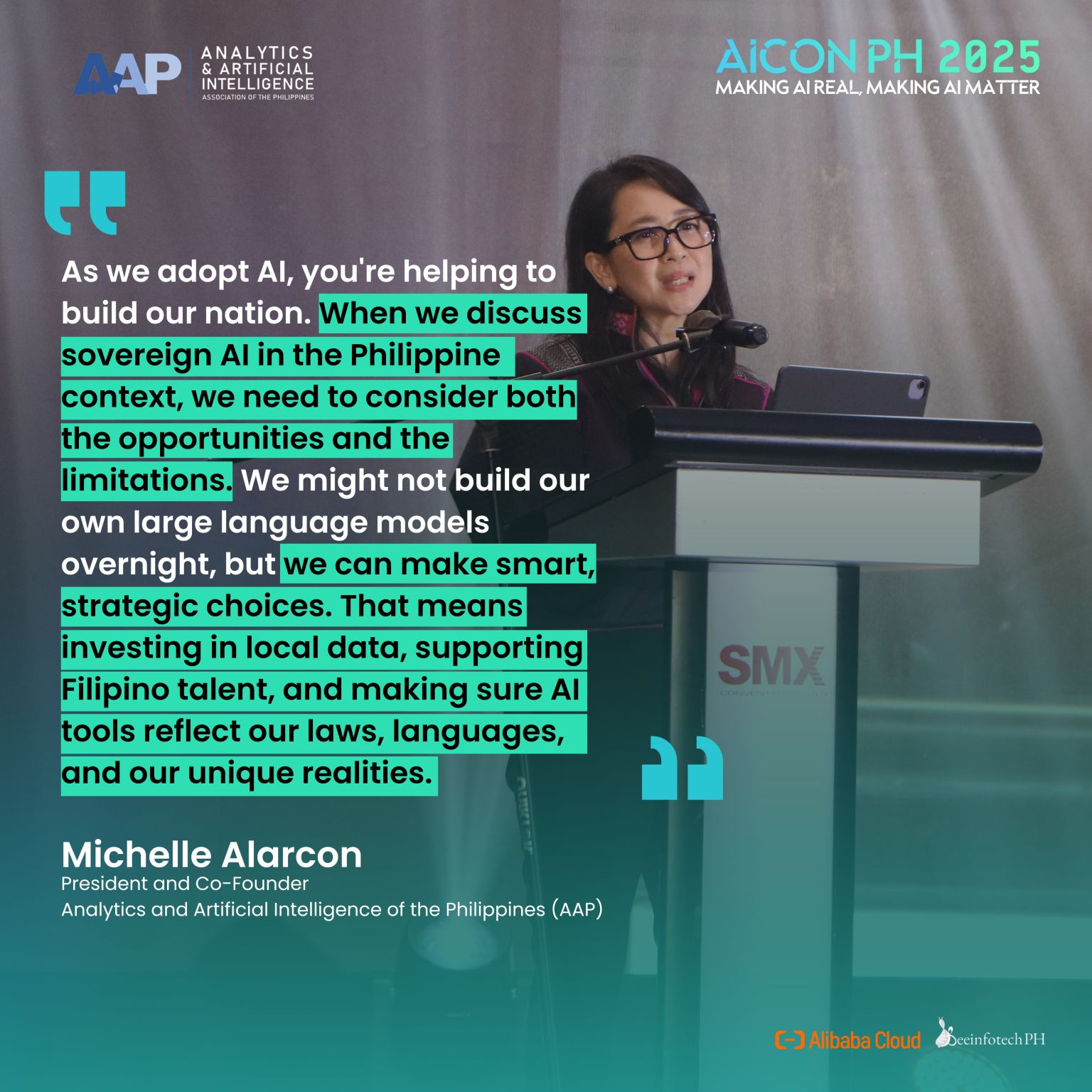
Alarcon extends this responsibility beyond individual organizations through her advocacy for what she describes as sovereign AI. At AICON PH 2025, she emphasized the need for localized and context-specific AI development. This involved making deliberate choices so that systems used in the country are shaped around the needs of Filipino communities.
AI systems are trained using enormous amounts of data, yet these datasets do not always represent Filipino languages, institutions, experiences, and social realities. When Filipinos are poorly represented in the information used to develop a system, they may become even less visible in the decisions it produces.
Sovereign AI does not necessarily require the Philippines to build every technology independently. Rather, it asks the country to invest in local data and professionals while ensuring that imported systems remain appropriate for the people they will affect. The issue here is whether systems exercising great influence over Filipino lives are capable of understanding the realities within those lives.
From this perspective, FTW, AI governance, and sovereign AI are not separate parts of Alarcon’s career. They are responses to the same fundamental question of who is recognized within the technological future.
FTW asks who receives the opportunity to participate in that future. AI governance asks how people will be treated once that future arrives. Sovereign AI asks whether the systems shaping the country will understand Filipino realities at all. Across these different areas, Alarcon’s leadership repeatedly directs attention toward the people whom technological progress may otherwise overlook.
Her example can be understood as responsible servant leadership. It reflects service because it considers the needs of people with less institutional power. It demonstrates courage because it raises questions about risk in spaces naturally inclined to celebrate innovation. It reflects accountability because it refuses to let organizations hide behind technological complexity. Finally, it demonstrates creativity because her response is not limited to criticism. She helps build learning pathways, professional communities, governance structures, and standards capable of producing more lasting change.
Alarcon’s story is the story of a woman who entered a relatively narrow professional pathway, excelled within it, and used the authority gained through that excellence to make the pathway wider for others.
“She learned the game, then worked to change its rules.”
Leadership, in this sense, does not always mean resisting the direction in which an industry is moving. At times, it means moving in the same direction while refusing to proceed blindly. It means recognizing the possibilities of artificial intelligence without treating its consequences as someone else’s problem. Above all, it means accepting that the authority to introduce change carries a responsibility toward the people who must live with it.
I entered the summit expecting to learn what artificial intelligence could make possible. As the panel continued, I found myself thinking more deeply about what its adoption should require from those who lead it. Among discussions of transformation, innovation, and scale, Alarcon raised the question that seemed most necessary: when AI goes wrong, who will stand behind the decision?
Her answer was clear. Responsibility must begin with the leaders who decide how AI is used and whose lives it is allowed to affect.
In an industry trained to look aggressively forward, Michelle Alarcon’s leadership reminds us first to look around. Progress should not be measured only by the speed of innovation and adoption, but by whether the people entering the future we’re building are seen, included, and protected.
References
- Alarcon, M (n.d.). Michelle Alarcon. [LinkedIn Page]. Retrieved July 16, 2026, from https://www.linkedin.com/in/michelle-alarcon-91477513/
- Alarcon, M., & Teehankee, B. (2025, October 27). Accountability and responsible governance in tech adoption (C. Yang, Interviewer). https://www.youtube.com/live/EMuTlCZrfBo
- Analytics & Artificial Intelligence Association of the Philippines (AAP). (2025, August 11). AAP President Michelle Alarcon underscored at AICON PH 2025 the importance of localized and context-specific AI development in the Philippines. LinkedIn. https://www.linkedin.com/posts/analytics-ai-ph_aiconph2025-iamaap-datadrivenph-activity-7360588381849858048-uc9L
- Arguelles, B. I. (2022). Women in science. Philippine Statistics Authority. https://psa.gov.ph/sites/default/files/ncs/paper-presentations-manuscripts/WomeninScience.pdf
- Dizon, P. (2023, May 12). PH-based FTW Foundation to empower more women in data science. The Independent Investor. https://theindependentinvestor.ph/ph-based-ftw-foundation-to-empower-more-women-in-data-science/
- PeopleAsia. (2024, March 28). These Filipino women are leading the Philippines’ digital transformation. https://peopleasia.ph/these-filipino-women-are-leading-the-philippines-digital-transformation/
- Manila Standard. (2024, June 3). GCash sparks dialogue on enabling more women in STEM fields. Manila Standard. https://manilastandard.net/?p=314454676
- FTW Foundation (For the Women) PH. (n.d.). FTW (For The Women) Foundation PH. Retrieved July 15, 2026, from https://www.ftwfoundation.org/
- RG Manabat & Co. R.G. Manabat & Co. Technology Consulting Head Jallain Manrique Moderated the Session on AI Governance and Public Policy at the MAP X KPMG Technology Summit 2026., 30 June 2026. https://www.facebook.com/share/p/1GNurRY9qx/.
- Our speaker - Michelle Alarcon. (n.d.). https://www.unlockingcapitalforsustainability.com/speakers/michelle-alarcon