The problem
University help desks receive emails, forms, and walk-in requests that staff have to sort by hand. A simple question can sit in the same queue as a complicated case. We wanted to handle routine questions quickly and give staff more time for the requests that need their attention.
- RoleFull-stack developer
- ContextKPMG Academic Innovation Challenge
- ScopeText and voice service-desk intake
- ResultTop 3 of 100+ teams
What we built
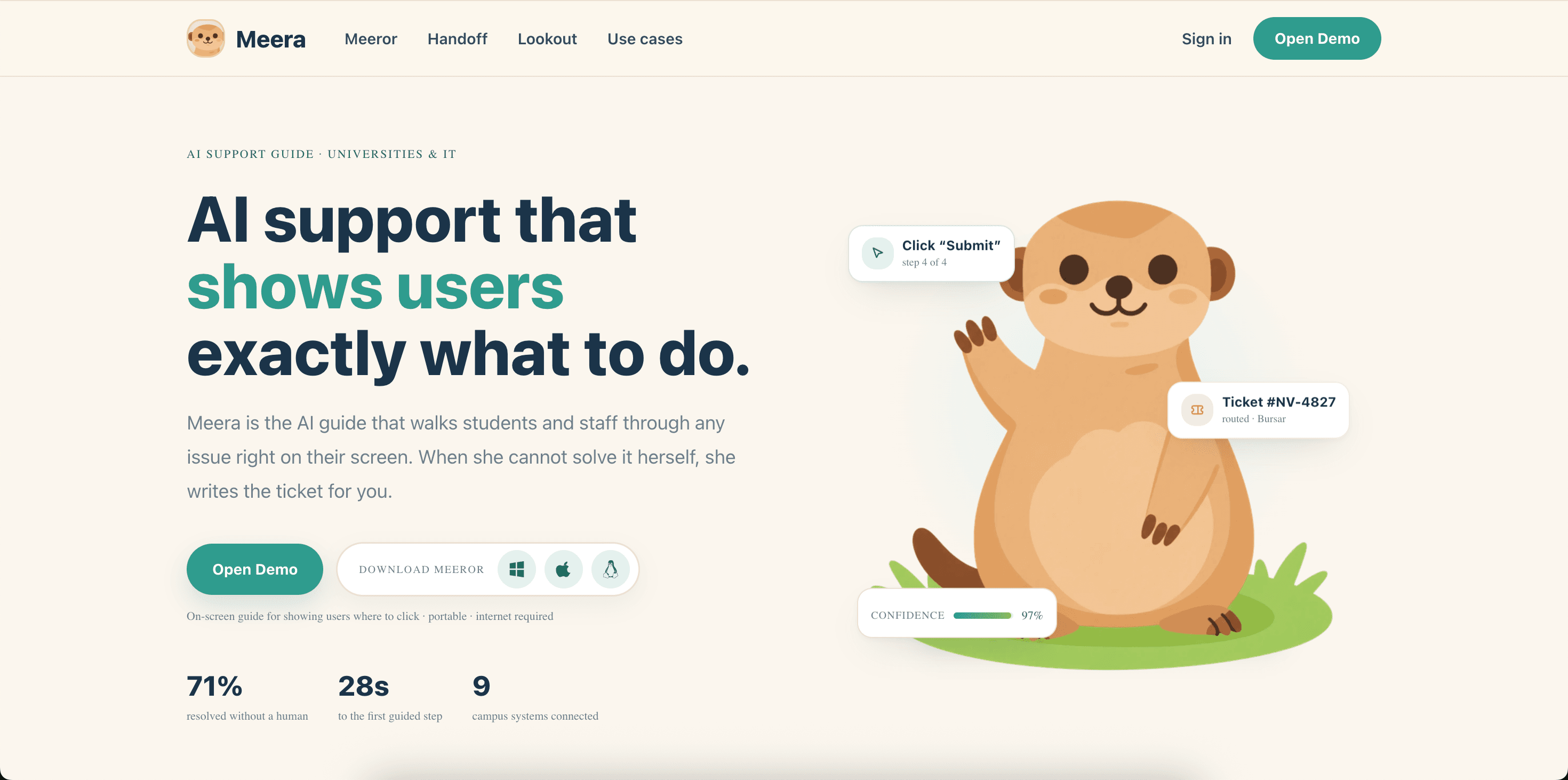
Meera takes a typed or spoken request, identifies the intent, and classifies the concern. It checks known answers before escalating an unresolved case to the relevant team. We added real-time voice transcription so phone and walk-in requests could use the same processing steps as text.
BUILT WITHReactNext.jsCloudflare D1Cloudflare R2GroqOllamaDeepgram Aura
Technical decisions
Separate steps for classification and resolution
We split the workflow into parsing, classification, resolution, and routing. We could debug each step during the challenge and choose different models for different jobs: Groq for fast classification and local Ollama for lower-cost drafting.
Sharing the text and voice workflow
We used Wispr and Deepgram Aura in the voice interface so spoken requests could enter the same parsing, classification, and resolution flow as typed requests. We did not need a separate support workflow for voice.
Testing across university departments
I tested more than 10 scenarios across IT, registrar, finance, health, and student services. The checks covered routing, confirmations, and escalation behavior.
Tradeoffs
Escalating uncertain requests
We chose to escalate when confidence was low. That reduces the number of requests handled automatically, but it also reduces the chance of giving someone a wrong answer without a staff member reviewing it.
Limits of the challenge build
Retries, authentication, and audit logging covered only what the demo needed.
Results
- Teams entered
- 100+
- KPMG placement
- Top 3
- Intake channels
- Text + Voice
- Our text-and-voice intake system placed 2nd Runner-Up among 100+ teams at the KPMG Academic Innovation Challenge, with a PHP 20K prize.
- Separating the steps let us debug classification, resolution, and escalation individually.